What Even Is a TopLevel Domain?
Let’s start with the basics. A domain name is made up of several segments. In the domain name in the video is www.flamingflamingos.eu, what is the top level domain in this name?, the key pieces are:
www – a subdomain (often optional) flamingflamingos – the secondlevel domain (typically the actual brand or organization name) .eu – the toplevel domain (TLD)
So the answer to “what is the top level domain in this name?” is .eu.
TLDs are the part of a domain that comes after the last dot. They’re fixed by global internet authorities and help define what kind of entity or region the domain belongs to.
Why TLDs Matter
Not all TLDs are created equal. Consider these categories:
Generic TLDs (gTLDs): .com, .org, .net—they’re open to anyone. Country Code TLDs (ccTLDs): .uk, .fr, .eu—these relate to countries or regions. Specialized TLDs: .tech, .coffee, .io—these often suggest industry or purpose.
In our case, the .eu at the end of the domain name in the video is www.flamingflamingos.eu, what is the top level domain in this name? is a European Union ccTLD.
This suggests the website—or at least the entity behind it—has ties to the EU. That could indicate a European customer base, compliance with EU regulations, or simply a regional branding choice.
Why Use .eu Instead of .com?
Let’s say the flaming flamingos are a band, a birdwatching nonprofit, or a quirky online shop. Why choose .eu over the goto .com?
Here are a few strategic reasons:
Regional Trust: European users may feel more at ease seeing a .eu domain. Availability: The perfect .com name might be taken, but .eu could be open. Compliance: A .eu implies certain adherence to GDPR and EU regulatory frameworks.
Sometimes, the choice isn’t just vanity—it reflects legal, strategic, or audiencebased decisions.
Anatomy of the Full Domain
To round it off, here’s how the full domain from our example breaks down:
www – optional prefix, originally used to denote “World Wide Web” flamingflamingos – the brand or main identifier .eu – the toplevel domain indicating region (the EU)
Which brings us back, again, to the main question in the domain name in the video is www.flamingflamingos.eu, what is the top level domain in this name? — the toplevel domain here is clearly .eu.
Here’s Why You Should Care
Understanding domains isn’t just for IT folks or marketers. If you’re launching a product, registering a business, or even just spreading a blog, knowing what your domain name says about you can impact:
Search rankings User trust Regional visibility Legal obligations
For example, a .eu domain is governed by policies set by EURid, the registry appointed by the European Commission. Meaning your registration could be subject to different vetting criteria than a gTLD like .com.
Final Takeaways
Let’s simplify:
The full domain in the example is www.flamingflamingos.eu. The toplevel domain in that URL is .eu. TLDs can reflect geographic focus, availability, and strategic branding. Choosing the right one isn’t just technical—it’s tactical.
So next time you’re evaluating or registering a domain, don’t just look at the name in the middle. That dotsomething at the end? It can tell a bigger story.
And now you’ll know exactly what to say if someone hits you with: “the domain name in the video is www.flamingflamingos.eu, what is the top level domain in this name?”
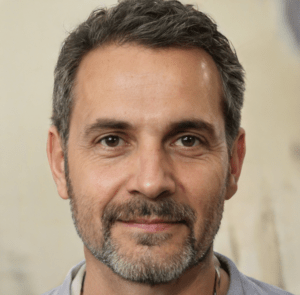 Rogerry Nelsonier is a trailblazer in the tech industry, renowned for his passion for technology and its potential to drive societal impact. Inspired by the rapid advancements in technology, Rogerry envisioned a collaborative space where innovative minds could converge to explore groundbreaking ideas and develop transformative solutions. This vision culminated in the founding of Info Wave Circle, a dynamic community dedicated to fostering innovation and creativity.
Rogerry's journey began in Pompano Beach, Florida, where he established Info Wave Circle to bring together like-minded individuals passionate about leveraging technology for positive change. Under his leadership, Info Wave Circle has grown into a thriving hub for tech enthusiasts, entrepreneurs, and innovators. Rogerry’s commitment to pushing the boundaries of what technology can achieve continues to inspire those around him, making Info Wave Circle a beacon of progress and societal advancement.
Rogerry Nelsonier is a trailblazer in the tech industry, renowned for his passion for technology and its potential to drive societal impact. Inspired by the rapid advancements in technology, Rogerry envisioned a collaborative space where innovative minds could converge to explore groundbreaking ideas and develop transformative solutions. This vision culminated in the founding of Info Wave Circle, a dynamic community dedicated to fostering innovation and creativity.
Rogerry's journey began in Pompano Beach, Florida, where he established Info Wave Circle to bring together like-minded individuals passionate about leveraging technology for positive change. Under his leadership, Info Wave Circle has grown into a thriving hub for tech enthusiasts, entrepreneurs, and innovators. Rogerry’s commitment to pushing the boundaries of what technology can achieve continues to inspire those around him, making Info Wave Circle a beacon of progress and societal advancement.